Cash vs Accrual Accounting Explained: Which Method Is Right for Your Business?
Choosing the right accounting method is one of the most important financial decisions a business can make. Whether you’re a startup, freelancer, e-commerce store, or an established company, understanding cash accounting vs accrual accounting is essential for maintaining accurate financial records, making informed decisions, and staying compliant with tax regulations.
Both methods have their advantages, but selecting the wrong one can create an inaccurate picture of your business’s financial health.
In this comprehensive guide, we’ll explain the differences between cash and accrual accounting, compare their pros and cons, and help you determine which method best suits your business.
What Is Cash Accounting?
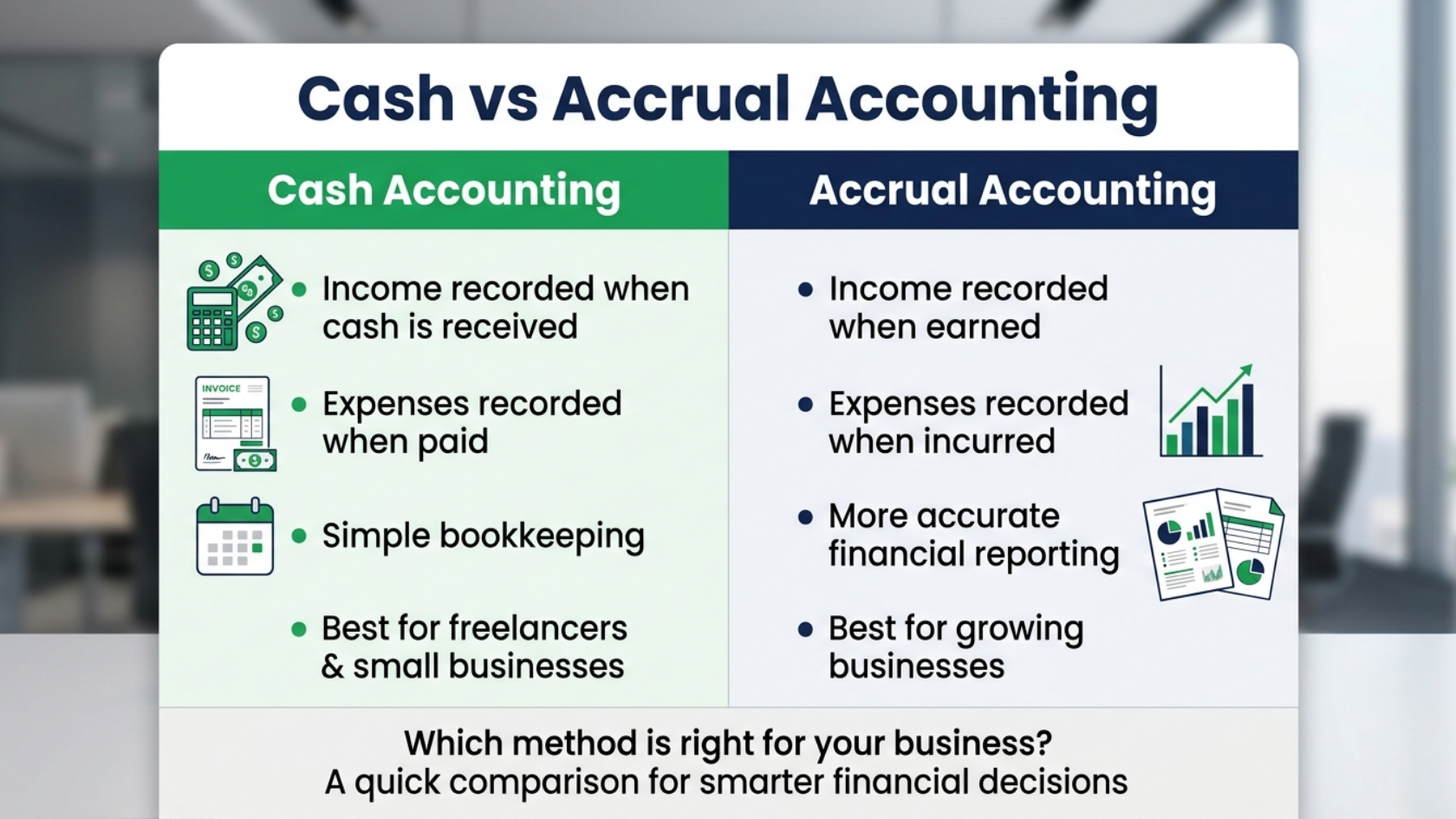
Cash accounting is the simplest accounting method. Income is recorded only when cash is received, and expenses are recorded only when money is paid out.
This means your financial statements reflect your actual cash position rather than money owed or bills yet to be paid.
Example
Suppose you send an invoice to a client on March 1 for $5,000, but they pay you on April 10.
With cash accounting, the $5,000 is recorded as revenue in April, when the payment is received.
Likewise, if you receive a supplier invoice in March but pay it in April, the expense is recognized in April.
Advantages of Cash Accounting
- Easy to understand and maintain
- Lower bookkeeping costs
- Clearly shows available cash
- Ideal for freelancers and sole proprietors
- Simplifies tax planning in many situations
- Less administrative work
Disadvantages of Cash Accounting
- Doesn’t show outstanding invoices
- Doesn’t include unpaid bills
- Can misrepresent profitability
- Less suitable for growing businesses
- Limited insight into long-term financial performance
What Is Accrual Accounting?
Accrual accounting records income when it is earned and expenses when they are incurred, regardless of when money changes hands.
This method follows the matching principle, ensuring that revenue and related expenses appear in the same accounting period.
Example
If you complete a project in March and invoice your client immediately, the revenue is recorded in March—even if payment arrives in April.
Similarly, expenses are recognized when they occur rather than when they’re paid.
Advantages of Accrual Accounting
- Provides a more accurate financial picture
- Tracks accounts receivable and accounts payable
- Better for budgeting and forecasting
- Preferred by lenders and investors
- Supports long-term business planning
- Often required as businesses grow
Disadvantages of Accrual Accounting
- More complex bookkeeping
- Requires regular reconciliations
- May require accounting software or professional support
- Profits may appear higher than available cash because unpaid invoices are included
Cash Accounting vs Accrual Accounting
| Feature | Cash Accounting | Accrual Accounting |
|---|---|---|
| Revenue Recognition | When cash is received | When revenue is earned |
| Expense Recognition | When paid | When incurred |
| Complexity | Simple | More advanced |
| Cash Flow Visibility | Excellent | Moderate |
| Financial Accuracy | Basic | High |
| Best For | Small businesses, freelancers | Growing businesses and companies with inventory |
| Long-Term Planning | Limited | Excellent |
| Investor/Lender Reporting | Less informative | Preferred |
Simple Example
Imagine your business completes a $10,000 project in December.
The customer pays in January.
Cash Accounting
- December Revenue: $0
- January Revenue: $10,000
Accrual Accounting
- December Revenue: $10,000
- January Revenue: $0
This illustrates why accrual accounting provides a clearer view of business performance during a specific period.
Which Accounting Method Is Best?
Cash Accounting Is Best If You:
- Are a freelancer
- Operate a small service business
- Have straightforward finances
- Want simple bookkeeping
- Focus on day-to-day cash flow
Accrual Accounting Is Best If You:
- Run a growing company
- Sell products or manage inventory
- Have employees
- Seek funding or investment
- Need detailed financial reporting
- Want accurate performance measurement
Why Many Growing Businesses Switch to Accrual Accounting
As businesses expand, cash accounting often becomes insufficient because it doesn’t account for unpaid invoices or outstanding expenses.
Accrual accounting helps business owners:
- Understand true profitability
- Forecast future cash flow
- Make informed hiring decisions
- Secure financing
- Prepare professional financial statements
- Improve budgeting and strategic planning
Common Mistakes to Avoid
Mixing Both Methods
Using cash accounting for some transactions and accrual accounting for others can create inaccurate financial records.
Ignoring Outstanding Invoices
Businesses using cash accounting may underestimate future income by overlooking unpaid customer invoices.
Forgetting Unpaid Bills
Outstanding supplier invoices should be tracked carefully, especially if you’re using accrual accounting.
Waiting Until Tax Season
Keeping your books updated throughout the year reduces stress and helps identify financial issues early.
Can You Switch Accounting Methods?
Yes. Many businesses begin with cash accounting due to its simplicity and later transition to accrual accounting as they grow.
Before making the switch, consult an accounting professional to ensure compliance with applicable tax rules and reporting requirements.
Best Accounting Software for Either Method
Modern cloud accounting platforms support both cash and accrual accounting.
Popular options include:
- QuickBooks Online
- Xero
- Zoho Books
- FreshBooks
- Wave Accounting
Choosing the right software depends on your business size, reporting needs, and growth plans.
If you’re considering using an accounting software, read our guide on Top 10 Accounting Software Tools for Small Businesses.
Frequently Asked Questions
Is cash accounting easier?
Yes. Cash accounting is generally simpler to understand and manage, making it a popular choice for freelancers and very small businesses.
Which method is more accurate?
Accrual accounting provides a more complete picture of your company’s financial performance because it records transactions when they occur.
Can small businesses use accrual accounting?
Absolutely. Many small businesses choose accrual accounting from the beginning to support growth, financial planning, and better reporting.
Which method do investors prefer?
Investors and lenders typically prefer accrual accounting because it presents a more comprehensive view of a company’s financial position.
Final Thoughts
Choosing between cash accounting and accrual accounting isn’t about finding a universally better method—it’s about selecting the one that aligns with your business’s size, complexity, and goals.
Cash accounting offers simplicity and a clear view of available cash, while accrual accounting delivers a more accurate representation of financial performance and supports long-term decision-making.
If you’re unsure which method is right for your business, working with a professional bookkeeping and accounting firm can help you implement the most suitable approach, maintain accurate records, and build a stronger financial foundation.
Recommended Resources
- IRS – Accounting Methods: https://www.irs.gov/businesses/small-businesses-self-employed/accounting-methods
- IFRS Foundation – Financial Reporting Standards: https://www.ifrs.org
- QuickBooks Resource Center: https://quickbooks.intuit.com
- Xero Accounting Guides: https://www.xero.com
- SBA – Manage Your Finances: https://www.sba.gov/business-guide/manage-your-business/manage-your-finances