As we move through 2026, artificial intelligence (AI) is no longer just a cool experiment or something “big companies” use. It’s becoming a normal part of daily work for small and medium businesses too.
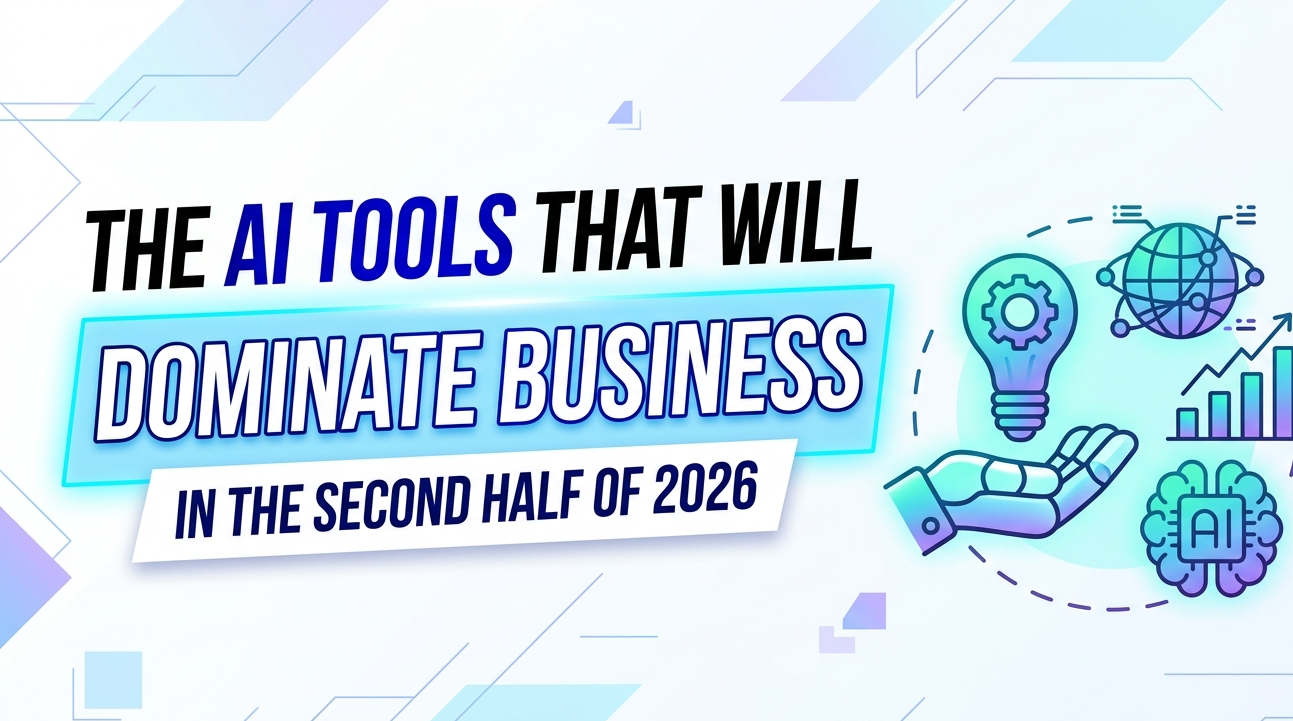
Right now, in the second half of 2026, AI tools are getting smarter, more helpful, and more focused on real results. They’re moving past simple chatbots that answer questions to AI agents — smart digital helpers that can plan, decide, and finish whole tasks on their own with little human help.
Think of them as digital team members who work 24/7, handle boring jobs, and let you focus on growing your business. Experts from places like Gartner, PwC, IBM, Deloitte, and Microsoft all agree: 2026 is the year AI shifts from “nice to have” to “must-have” for staying competitive.
In this post, we’ll look at the top AI tools and trends that are set to rule business in the coming months of 2026. We’ll keep it simple, explain why they matter, and give easy tips on how small businesses like yours can start using them.
1. AI Agents: Your New Digital Co-Workers
The biggest star of late 2026 is AI agents (also called agentic AI). These are not just chat tools — they act like mini-employees.
- They can handle multi-step tasks: For example, an agent might check your emails, update your CRM, create a report, and even send follow-up messages — all automatically.
- Why now? Tools have improved a lot. Companies like Salesforce (with Agentforce), Microsoft (Copilot agents), and Google (Gemini agents with “computer use” features) let agents control screens, click buttons, fill forms, and browse the web just like a human.
- For small businesses: Imagine an agent managing customer support tickets, booking meetings, or tracking inventory without you lifting a finger.
Real impact: PwC and Deloitte say 2026 is when agentic AI starts showing clear business value — like cutting costs, speeding up work, and freeing people for creative jobs. Many experts call it “the year of the agent.”
Easy start tip: Try free or low-cost agent builders like Zapier Agents or Microsoft Copilot Studio. Set up a simple one for email follow-ups or social media posting.
2. Multi-Agent Systems and Orchestration Tools
One agent is good — but a team of them is game-changing.
- Multiagent systems let different AI “workers” talk to each other. One agent researches, another analyzes data, a third creates content, and a fourth approves and sends it.
- Gartner lists multiagent systems as a top trend for 2026. Tools help “orchestrate” these agents so they work together smoothly.
- Examples: Platforms from Salesforce, Google Cloud, or open-source options let you build “digital assembly lines” for workflows like sales leads or invoice processing.
For SMBs: This means automating entire processes (like onboarding new clients) that used to take days.
Why it dominates now: Reports from Forrester and IBM show businesses moving to “agent meshes” instead of single tools. It’s about end-to-end automation that saves real money.
Simple way to try: Use tools like n8n or Make.com with AI integrations to connect agents for your specific needs.
3. Generative AI as an Organizational Must-Have
Generative AI (like ChatGPT-style tools) is maturing.
- In early 2026, many used it personally (writing emails or ideas). Now, it’s becoming company-wide.
- MIT Sloan and PwC predict 2026 focuses on GenAI as a shared resource — with company data connected safely so everyone gets better answers.
- Popular tools: ChatGPT Enterprise, Claude for teams, Microsoft Copilot, Google Gemini for Workspace.
Business wins: Faster reports, better customer replies, and data queries in plain English (no coding needed).
Tip for you: Connect your business docs or CRM to these tools for “ask anything” features. Start small — one department at a time.
4. Specialized and Vertical AI Tools
Generic AI is giving way to tools made for specific jobs or industries.
- Domain-specific models (Gartner trend) are trained on your kind of business — accounting, retail, healthcare, etc.
- Examples: Tools for small business accounting (AI that spots errors or predicts cash flow), marketing (Jasper or similar for brand-specific content), or customer service (special agents).
Why huge in late 2026: They give better results with less tweaking. Aptean and others say vertical AI is where leaders win.
For small businesses: Look for affordable ones like Notion AI for team organization, Fireflies for meeting notes, or ElevenLabs for voice content in ads.
5. AI for Security, Trust, and Efficiency
With more AI use comes more risks — but also better protection.
- Preemptive cybersecurity and confidential computing (Gartner) use AI to spot threats before they hit.
- Tools focus on “AI sovereignty” (keeping your data private) and trust — like explaining decisions so customers feel safe.
- IBM and Forbes highlight transparency and security as key for customer trust.
Simple tools: Built-in features in Microsoft or Google suites, or add-ons for data privacy.
Why it matters: As AI handles more sensitive work, secure tools build confidence and avoid problems.
6. Ambient Intelligence and Physical AI
Looking ahead, AI is becoming “always-on” in the background.
- Ambient intelligence (Salesforce trend) means AI watches workflows quietly and helps without you asking.
- Physical AI combines AI with robots or devices — useful for warehouses, retail, or delivery (Deloitte calls it “AI goes physical”).
For now, this is emerging, but in late 2026, early adopters in logistics or retail will see big gains.
How Small Businesses Can Get Started in Late 2026
Don’t feel overwhelmed — start small and build:
- Pick one pain point (e.g., too much email or slow customer replies).
- Try a free tool like ChatGPT, Claude, or Microsoft Copilot.
- Add an agent for automation (Zapier or similar).
- Train your team with simple guides — many tools have easy tutorials.
- Measure results: Time saved, money gained, happier customers.
- Scale up to multi-agents or specialized tools once you see wins.
Watch costs: Many have free tiers or low monthly fees perfect for SMBs.
Final Thoughts
In the second half of 2026, the AI tools dominating business aren’t flashy sci-fi gadgets — they’re practical helpers that save time, cut costs, and let humans do what we do best: create, connect, and grow.
AI agents, multi-agent teams, secure GenAI, and specialized tools are leading the way. Businesses that adopt them smartly will move faster, serve customers better, and stay ahead — even in tough economic times.
Stay smart, stay ahead.